Rhubarb Rolls
A seasonal twist on our signature high-protein sourdough cinnamon roll base. We trade the heavy brown sugar and cinnamon filling for a sharp, vibrant fresh rhubarb compote. Made with a Greek yogurt and active sourdough dough for a better protein structure
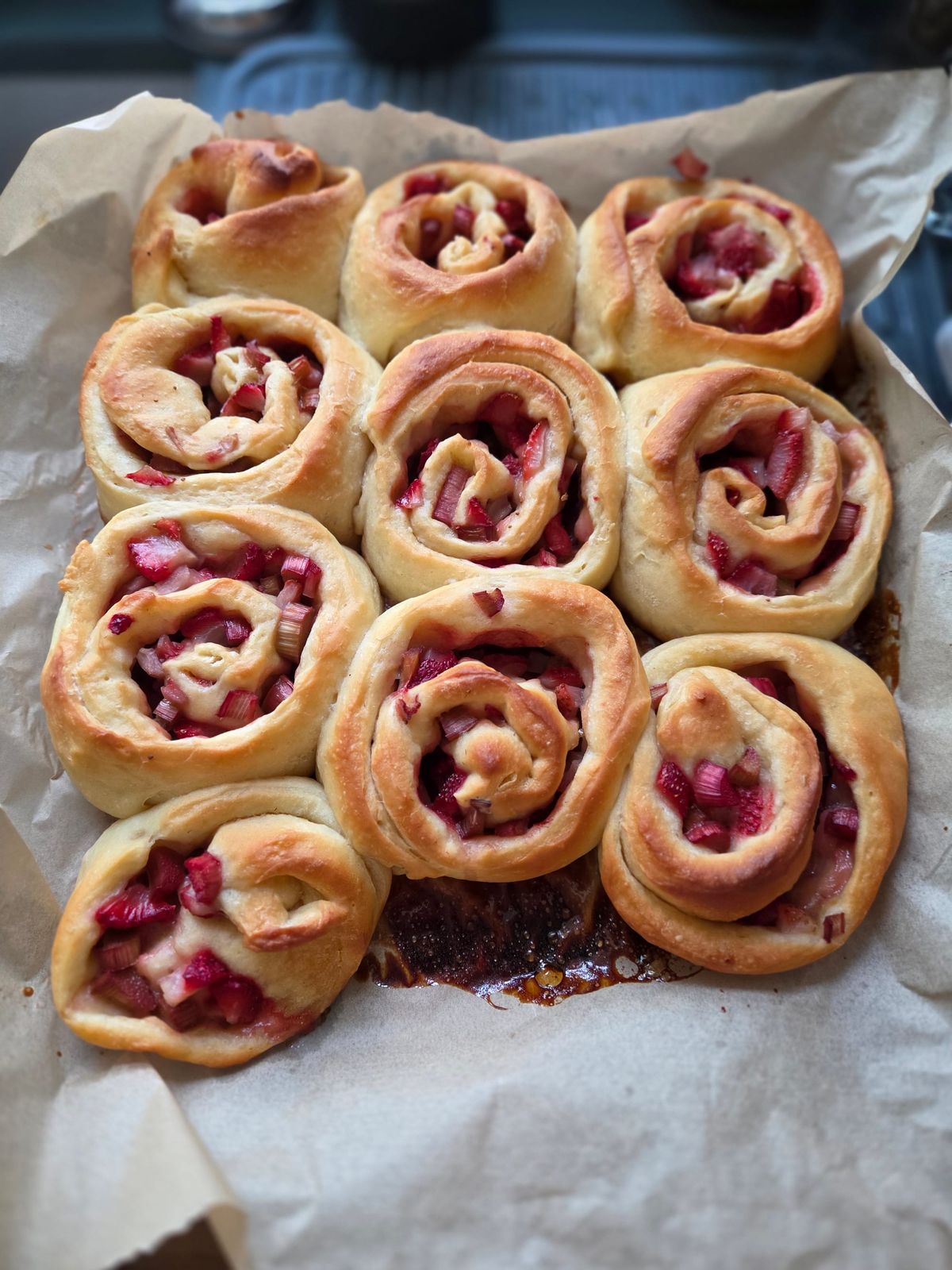
High-Protein Rhubarb Sourdough Rolls
A seasonal, nutrient-dense twist on our signature high-protein sourdough cinnamon roll base. We trade the heavy brown sugar and cinnamon filling for a sharp, vibrant fresh rhubarb compote.
Ingredients
The High-Protein Sourdough Base (In Grams):
- 560g bread flour
- 140g active, fed sourdough starter
- 265g plain Greek yogurt (or skyr, for the protein structure)
- 40g whole milk
- 75g unsalted butter, softened
- 45g granulated sugar
- 2 large eggs
- 9g fine sea salt
- 4g baking powder (added right before shaping for an extra boost)
- 1 tsp vanilla extract
The Seasonal Rhubarb Filling:
- 250g fresh rhubarb, finely diced (about 2 cups)
- 50g unrefined cane sugar or honey
- 1 tsp fresh orange or lemon zest
Instructions
1. Mix and Ferment the Dough (Day 1)
- In a large mixing bowl or the bowl of a stand mixer, combine your active sourdough starter, Greek yogurt, whole milk, eggs, sugar, and vanilla extract. Whisk until smooth.
- Add the bread flour and fine sea salt. Mix with a dough hook on low speed (or by hand) until a shaggy dough forms and no dry pockets of flour remain.
- Cover the bowl and let it rest for 30 minutes to autolyse.
- Add the softened butter to the dough in chunks. Knead on medium-low speed for 8 to 10 minutes, or until the dough becomes smooth, supple, and completely pulls away from the sides of the bowl.
- Cover the bowl tightly and let it ferment on the kitchen counter at room temperature for 8 to 12 hours (overnight), or until it has noticeably puffed and expanded by about 50%.
2. Prepare the Rhubarb Filling
- While the dough finishes its long rise, combine the finely diced rhubarb, sugar, and orange zest in a small saucepan over medium-low heat.
- Simmer gently for 5 minutes, stirring occasionally. You want the rhubarb to soften slightly and release its juices without turning completely into a mushy jam.
- Remove from the heat and let it cool completely before using. (You can do this the night before and keep it in the fridge).
3. Shape and Roll (Day 2)
- Gently turn the fermented dough out onto a lightly floured work surface. Sprinkle the 4g of baking powder evenly over the top of the dough, then gently press and fold it over itself a few times to incorporate it.
- Using a rolling pin, roll the dough out into an even, flat rectangle, roughly 12x18 inches.
- Spread the cooled rhubarb filling evenly across the surface of the dough, leaving a clean half-inch border along the top edge.
- Starting from the long edge closest to you, roll the dough tightly into a uniform log.
- Using a sharp unflavored dental floss or a sharp bench scraper, slice the log into 12 equal-sized rolls.
4. Final Rise & Bake
- Arrange the rolls cut-side up in a well-greased 9x13 inch baking dish.
- Cover the dish with a damp kitchen towel and let them proof in a warm spot for 2 to 3 hours until they are puffy and touching each other.
- Preheat your oven to 350°F (175°C).
- Bake the rolls for 25 to 30 minutes, or until the tops are beautifully golden brown and the rhubarb filling is bubbling at the seams.
- Let them cool slightly in the pan before serving.